Dental implants are still possible for patients with severe bone loss
Tudor House Dental Surgery in Chester can use modern alternative techniques to bypass or reduce the need for traditional bone grafting, or even help you become a suitable candidate for traditional placement by rebuilding the bone in your jaw.
Bone loss is a common consequence of tooth loss
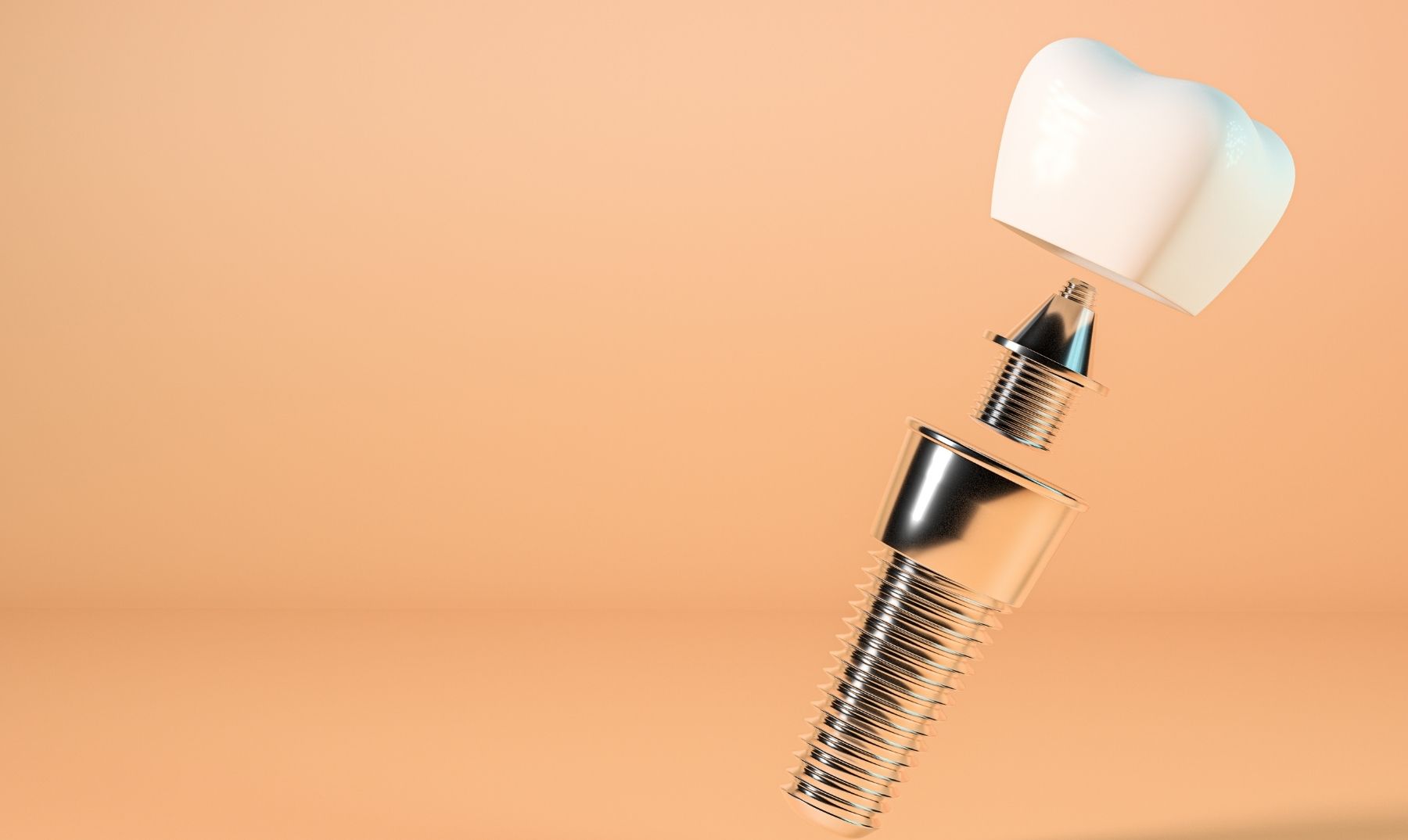
Dental implants are the most stable and secure solution for tooth loss, as they act as an artificial tooth root anchored in your jaw to support a fixed crown, bridge, or denture. But they require a good amount of dense bone to bond with to provide the ultimate long-lasting protection.
But bone depletion is a common side effect of a missing tooth. In fact, bone loss begins immediately after a tooth is lost, with up to 25% of the jawbone width being lost in the first year alone.
Typical timelines for bone resorption:
| Time After Tooth Loss | Typical Changes |
|---|---|
| 0-3 months | Early healing takes place, with only limited changes to bone volume usually visible. |
| 3-12 months | Bone shrinkage becomes more noticeable, with substantial reduction in ridge width and some loss of vertical height. |
| 1-5 years | Bone continues to resorb gradually, which may begin to alter facial support and jaw contours. |
| 5+ years | Advanced bone loss may significantly reduce available bone and can make future implant treatment more complex. |
| Additional considerations | Bone in the upper jaw often resorbs more quickly because it is generally less dense than bone in the lower jaw. Periodontal disease can also speed up bone deterioration, meaning loss may already be present before a tooth is removed. |
No bone, no implant, right?
Jawbone requires constant stimulation, and without natural tooth roots, there’s no way to maintain sufficient bone density and volume without a dental implant.
So, if you’ve lived with gaps in your mouth for years or worn dentures for a long time and now want to explore dental implant placement, you might not be an ideal candidate right away.
But there are ways around it. Insufficient bone doesn’t always automatically disqualify you from receiving dental implant treatment. Depending on the implant type we use and the extent of your tooth loss, modern implant dentistry offers multiple solutions based on your specific case, bone loss pattern, and severity.
How much bone will you actually need for successful dental implant treatment?
Traditional dental implant treatment requires specific bone dimensions for long-lasting, stable placement.
During a free consultation at Tudor House Dental Surgery in Chester, our implantologist, Dr Giedre Valantine will assess the following requirements to help determine if you have sufficient bone density for traditional implant placement or if you’ll require prior bone grafting procedures or an alternative approach:
| Bone Assessment | Typical Minimum | Preferred Range |
|---|---|---|
| Bone Height | Around 10 mm | Approximately 12–15 mm |
| Bone Width | Around 5–6 mm | Approximately 7–8 mm |
| Bone Density | D3 bone quality | D2–D3 bone quality |
Bone loss self-assessment
You may have been told after a CBCT scan that you don’t have enough bone to support an implant, or you may have read online that it’s a crucial factor in treatment success.
While only a consultation with an implant dentist like Dr Valantine will highlight what’s possible, there are several factors we’ve listed below that you might have noticed that indicate bone loss and will require further evaluation at the clinic:
- Facial changes: A more hollow or sunken appearance as the underlying bone gradually reduces.
- Denture fit issues: Dentures may become loose over time and need regular adjustments to stay comfortable.
- Receding gums: Gum tissue may pull back, making the teeth look longer and exposing more of the tooth surface.
- Older extraction sites: Areas where teeth have been missing for more than six months may already have experienced some bone reduction.
- Previous implant problems: A history of implants becoming loose or failing may indicate insufficient bone support or other underlying issues.

Solutions by bone loss severity available
Below are solutions that Dr Valantine might recommend, depending on the severity of your bone loss:
Minor bone loss
- 70-80% of original bone volume
- Traditional implants still possible
Solutions for successful implantation at this stage will remain relatively straightforward. Patients can receive implants without extensive reconstructions.
Additional procedures may include:
- Standard dental implant placement when sufficient bone remains
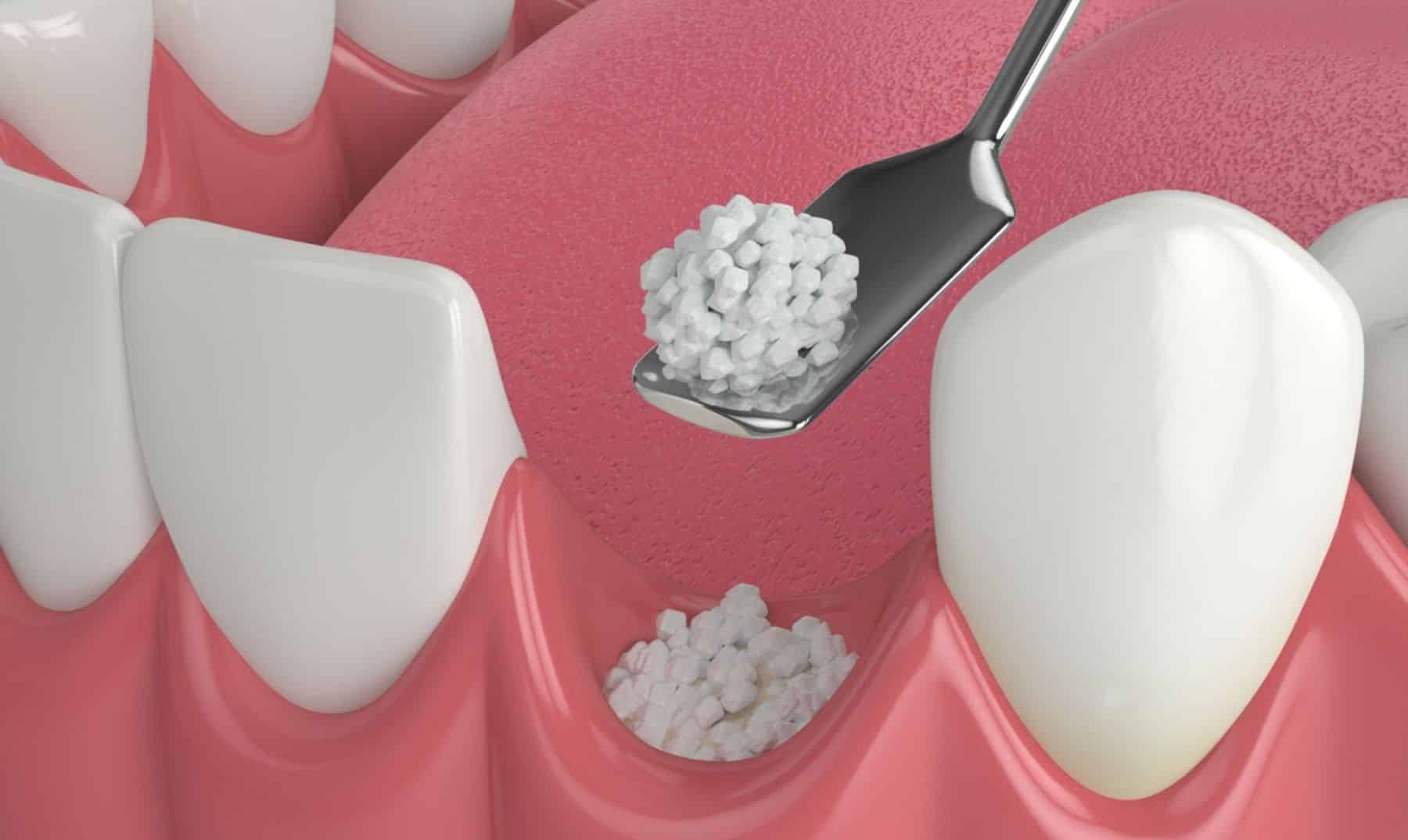
- Minor bone grafting to rebuild a small deficient area
- Guided bone regeneration (GBR) using grafting material and a protective membrane
- Socket or ridge preservation where appropriate to help maintain existing bone
- Narrower or shorter implants where conventional implant dimensions are not suitable
Benefits:
- Prevents future bone loss complications
- Success rates can exceed 95% when performed by experienced implantologists
- Bone grafts with protective membranes encourage natural bone growth
- Bone grafts integrate over 3-4 months before implants are placed
- GBR is particularly effective for width deficiencies
Timeline:
- Week 1: Initial consultation takes one appointment.
- Week 2-3: Bone graft procedure is often completed in one visit.
- 3-4 months: Healing period for new bone growth.
- 4-5 months: Dental implant placement.
- 7-8 months: Final restoration fitted.
Moderate bone loss
- Around 40-60% reduction in jawbone volume
- More extensive reconstruction is typically required
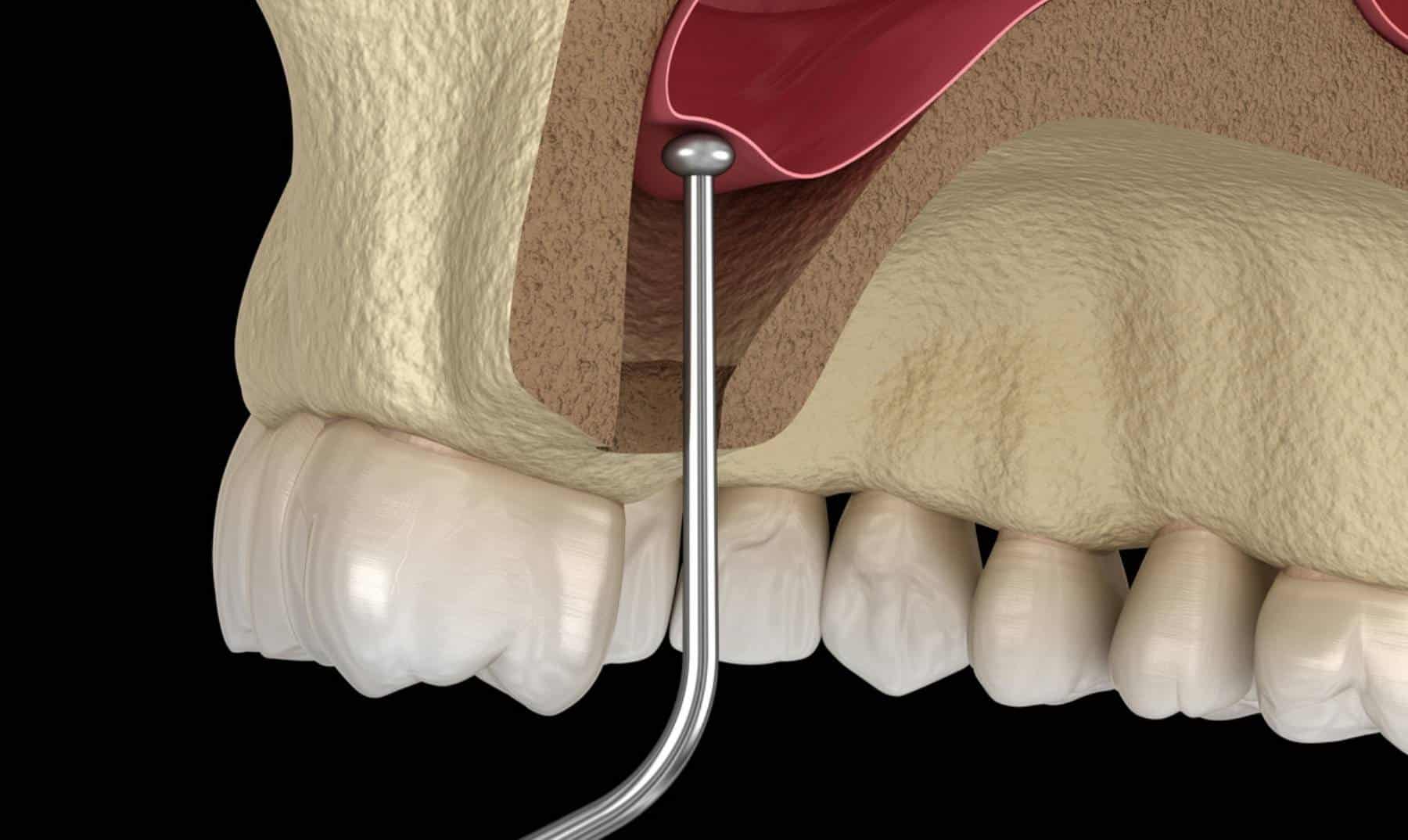
At this stage, with a significant reduction in available jawbone, additional procedures are often needed to rebuild the bone and create sufficient height or width to support standard placement.
Additional procedures may include:
- Block bone grafting to reconstruct larger areas of missing bone
- Internal sinus lift where a smaller increase in upper-jaw bone height is required
- External sinus lift where a greater amount of bone needs to be restored beneath the sinus
- Ridge expansion to widen areas of jawbone that are too narrow for standard implant placement
- Computer-guided implant planning to support accurate positioning in suitable cases
Potential benefits:
- Rebuilds lost bone volume before implant placement
- Creates a stronger foundation for standard dental implants
- Block bone grafting can restore larger bone defects
- Sinus lift procedures can increase available bone height in the upper jaw
- Ridge expansion can increase bone width where the jaw ridge is too narrow
- Reconstruction may allow implant treatment in areas that previously had insufficient bone
Typical treatment timeline:
- Week 1: Consultation, scans and treatment planning
- Weeks 2-4: Bone graft, sinus lift or ridge expansion procedure
- 4-6 months: Healing period for the grafted or reconstructed bone
- 5-7 months: Dental implant placement
- 8-12 months: Final restoration fitted
Severe bone loss
- Extensive loss of available jawbone
- Conventional implant placement may no longer be suitable without specialist treatment
Severe bone loss leaves insufficient bone to support traditional placement. However, patients may still qualify for implants and may need to explore advanced techniques that use alternative areas of stronger bone, reducing or avoiding the need for extensive bone grafting procedures.
Advanced procedures may include:
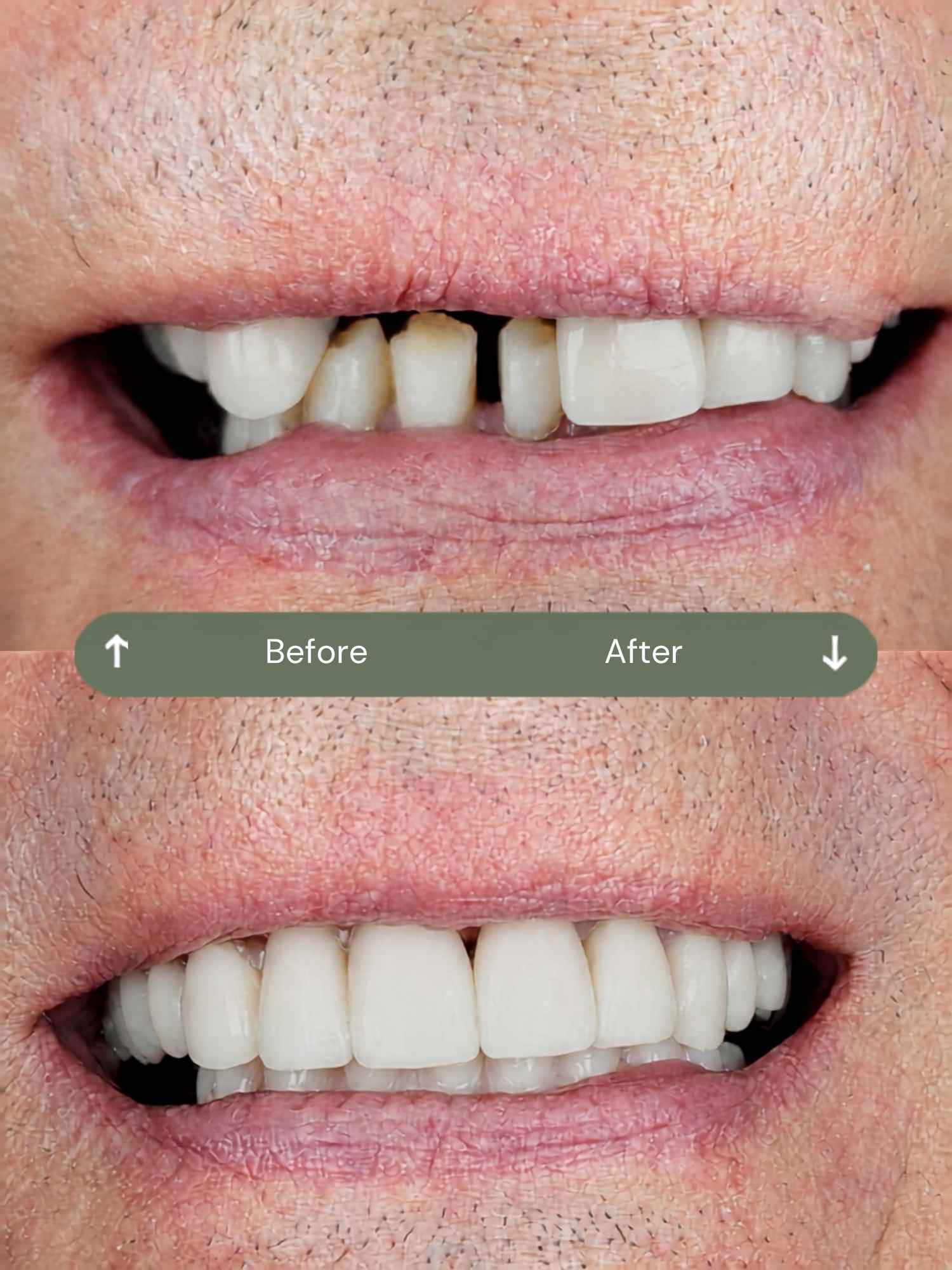
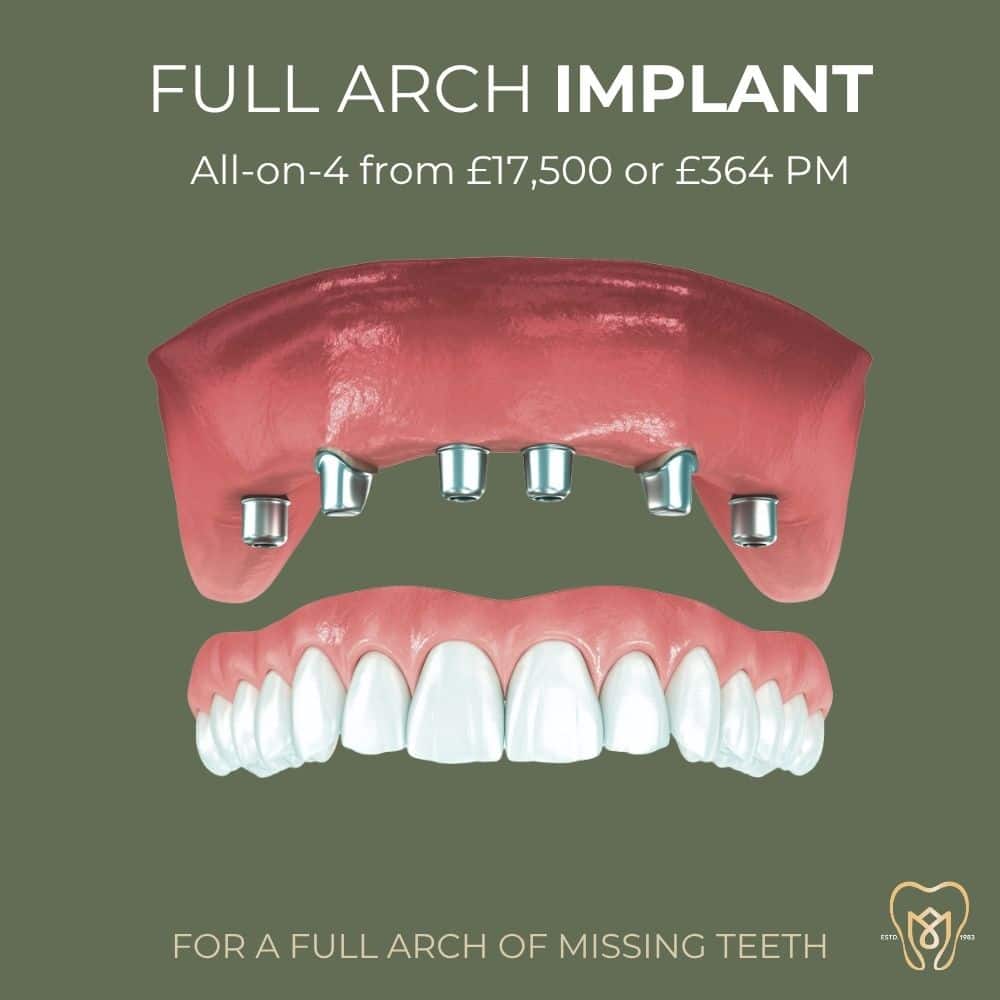
- All-on-4 dental implants use four strategically positioned implants to replace a full arch.
- Zygomatic implants are anchored into the cheekbone to support a full arch.
- Pterygoid implants use strong bone at the back of the upper jaw for a full arch.
- Subperiosteal implants use a custom framework positioned over the jawbone beneath the gum in selected complex cases to support a full arch.
Benefits:
- Strategically angled implants support a full arch restoration and maximise available bone.
- Procedures and techniques like All-on-4 eliminate the need for bone grafts in 80% of cases.
- Immediate loading of temporary teeth is made possible.
- The All-on-4 method has a particularly high 98% success rate with proper case selection.
- May shorten treatment compared with extensive grafting.
- Digital planning can help determine implant position and avoid important anatomical structures.
Typical treatment timeline:
- Week 1: Consultation, CBCT scan and assessment
- Weeks 2-4: Digital planning and preparation for implant surgery
- Treatment day: Placement of implants and, where appropriate, a temporary fixed restoration
- 3-6 months: Healing and implant integration
- 4-7 months: Final restoration fitted once healing is complete

Success rates by treatment type
| Treatment / Procedure | Reported Success / Survival Rate |
|---|---|
| Guided Bone Regeneration (GBR) | 90–100% |
| Block Bone Grafting | 86.8–98.7% |
| Sinus Lift | Around 97% |
| Ridge Expansion / Splitting | Around 98% |
| All-on-4 Dental Implants | 98–99% |
| Zygomatic Implants | 96–98.5% |
| Pterygoid Implants | 95–98% |

Costs to expect
| Treatment | Cost |
|---|---|
| Implant consultation | Free |
| CT scan | £140 |
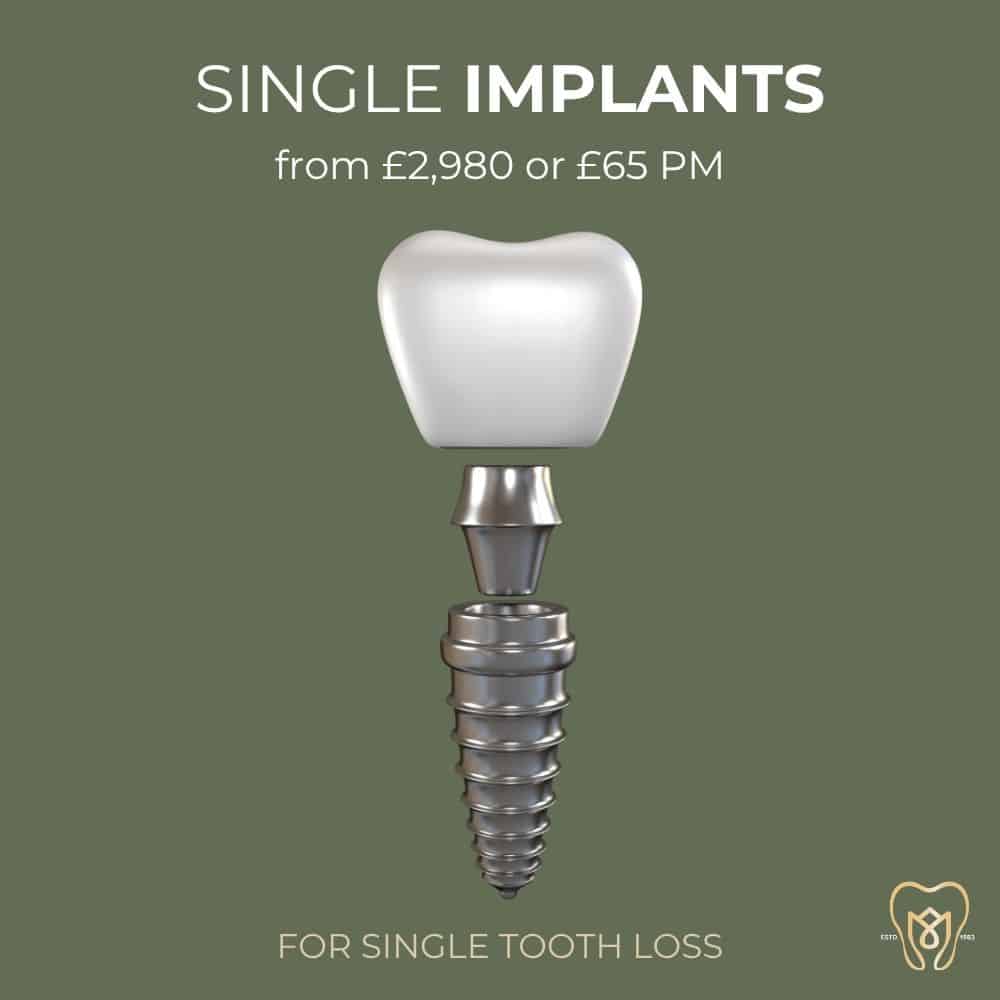
| Single dental implant including crown | From £2,980 |
| All-on-4 implants | From £17,500 |
| Bone grafting | £618 |
| Sinus lift | £600 |
Your final treatment cost will depend on your individual needs and will be confirmed following a full clinical assessment and personalised treatment plan. Dental finance is also available interest-free for 12 months and interest-bearing up to 60 months. Explore finance.
What sets our solutions and bone grafting treatments apart:
- Advanced implant expertise: Dr Giedre Valantine leads treatment and holds a Master’s in Dental Specialities (Implantology).
- Complex case experience: Dr Giedre Valantine treats cases ranging from single implants to complex bone grafting and full-arch rehabilitation.
- Solutions for complex bone loss: We offer a wide range of options for patients with reduced bone volume, including bone grafting, sinus lifts and advanced full-arch implant solutions.
- Premium implant systems: We work with established implant systems including Straumann and Nobel Biocare, chosen for their extensive clinical research, reliability and long-term performance.
- Advanced 3D treatment planning: CBCT imaging and digital planning allow us to assess bone volume, important anatomical structures and implant positioning before treatment begins.
- Long-term focus: Our aim is not simply to place an implant, but to create a stable foundation for comfortable function, natural aesthetics and predictable long-term results.
Next: Explore bone graft or sinus lift procedure information.
Sources
A GBR systematic review found that most included studies reported implant success of 90–100%, although the range across studies was wider. Source.
For implants placed in block-grafted bone, a long-term systematic review reported survival of 88.7–98.7%, while studies using defined success criteria reported 86.8–100%. Source.
For sinus lifts, a meta-analysis found implant survival of roughly 97% for both direct and indirect sinus-elevation approaches. Source. A systematic review and meta-analysis reported a pooled implant survival rate of 98.1% for ridge splitting. Source.
For All-on-4, a 2026 systematic review reported pooled implant survival of 99.2% at one year, 99.66% at 1–5 years, and 98.14% at ≥5 years. Source.
For zygomatic implants, a large systematic review found mean survival between 95.92% and 98.53%, depending on study design. Source. For pterygoid implants, systematic reviews report survival around 95–98%, including a recent meta-analysis reporting 97.9% pooled survival. Source.