
How to Choose Between Composite Veneers & Porcelain Veneers – A Comparison Guide
Right, you know you want to improve the colour, shape and symmetry of your smile, but which veneer material will work best for you? Composite veneers cost a third of the price of porcelain veneers, but will they be right for you long-term?
Both veneer treatments can easily help you achieve your smile goals and transform your teeth’s appearance. But they differ widely in cost, application, durability, treatment time, and long-term maintenance.
Compare the veneer materials below to learn everything you need to know before booking a consultation, so you can understand which treatment better serves your aesthetic goals, budget and glow-up timeline.

Veneer treatment options:
- Composite veneers use tooth-coloured resin applied directly to the teeth
- Porcelain veneers use custom-made porcelain shells bonded to the front teeth
- Composite veneers are usually quicker and more affordable
- Porcelain veneers are usually stronger and more stain-resistant
- Composite veneers are easier to repair, reshape or refresh
- Porcelain veneers last longer but require replacement over repair
Explore dental veneers at Tudor House Dental Surgery.

Composite veneer vs porcelain veneer overview:
In short, composite veneers are faster, more affordable and easier to repair. Porcelain veneers are stronger, more stain-resistant and longer-lasting.
| Comparison | Composite veneers | Porcelain veneers |
|---|---|---|
| Purpose | Improves tooth shape, colour and symmetry using tooth-coloured composite resin | Improves tooth shape, colour and symmetry using custom-made porcelain |
| Treatment time | Often completed in one visit, taking one day to apply | Usually takes three dental visits over three weeks including lab time |
| Tooth preparation | Often non or minimally invasive require no drilling or anaesthetic | May involve removing a thin layer of enamel so the veneer fits naturally |
| Appearance | Natural-looking, especially for subtle or moderate smile improvements | Highly aesthetic with a polished, premium and longer-lasting finish |
| Durability | Lasts up to 10 years | Lasts up to 20 years |
| Stain resistance | Can stain over time, especially with tea, coffee, red wine or smoking | Much more stain-resistant than composite resin |
| Repairability | Easier to repair, polish, reshape or add to | More difficult to repair and may need replacing if chipped or damaged |
| Maintenance | May need polishing, repairs or refreshing over time | Needs good hygiene and regular reviews, but usually needs less maintenance |
| Cost | From £250 per tooth | From £750 per tooth |

The right and best solution depends on your smile goals
Composite and porcelain veneers both address the same smile issues, cover the entire surface of your tooth, and improve how your smile looks. But they’re two different materials selected and used for different reasons and in different cases.
Composite veneers use a tooth-coloured resin that’s applied in layers and shaped directly onto the tooth chairside. In comparison, porcelain veneers are custom-made and prefabricated in a dental laboratory before being bonded to the front of the teeth.
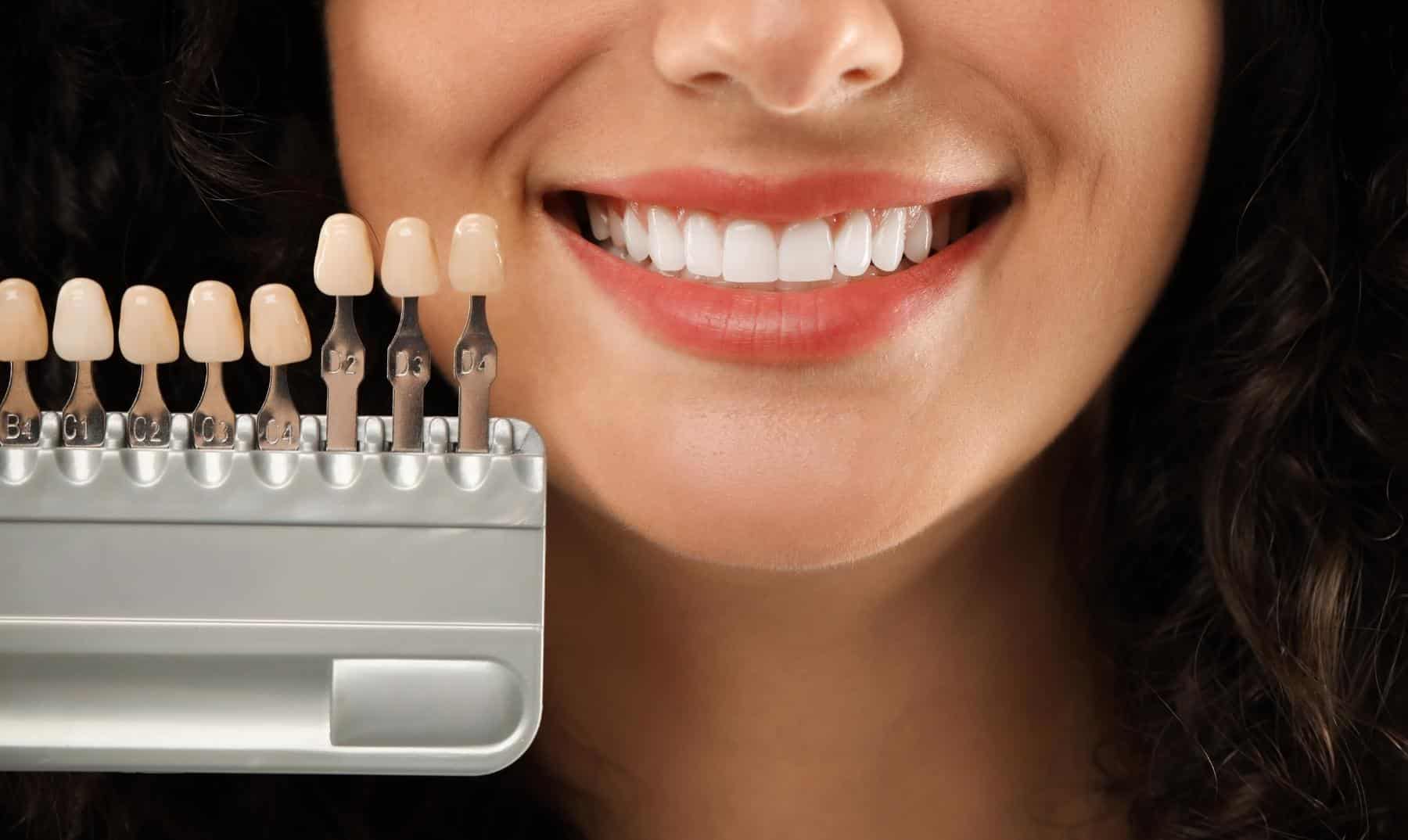
Purpose
- Composite improves tooth shape, colour and symmetry with resin
- Porcelain improves tooth shape, colour and symmetry with porcelain
Both treatments serve the same purpose and correct the same smile problems, such as uneven tooth shape, discolouration, worn edges, gaps, and teeth that are slightly out of proportion. However, porcelain is more favoured when patients prefer a longer-lasting, more polished improvement.

Treatment time
- Composite veneers are completed in one appointment
- Porcelain veneers take around three visits over three weeks
Composite veneers are the quicker treatment because the resin is applied and shaped chairside, so even if you’re opting for a full smile makeover, it can take just a few hours in the chair to complete.
Porcelain veneers, on the other hand, are custom-made by hand in a dental laboratory and require more smile design and planning before placement. So, if speed is the priority, composite takes the crown, but considering other factors, porcelain might be worth the little extra wait.

Tooth preparation
- Composite veneers often need little to no preparation
- Porcelain veneers may need a thin layer of enamel removed
Composite veneers can often be placed with minimal preparation, sometimes with no drilling or local anaesthetic. In some cases, the resin can be added directly to the tooth surface without removing any natural tooth structure. Porcelain veneers, however, require removing a thin layer of enamel (often around 0.5mm), which makes the procedure irreversible.
If preserving natural tooth structure is your priority, composite veneers may be the more appealing option. If the final result needs a bigger change in shape, colour or symmetry, porcelain veneers may still be the best choice.
Appearance
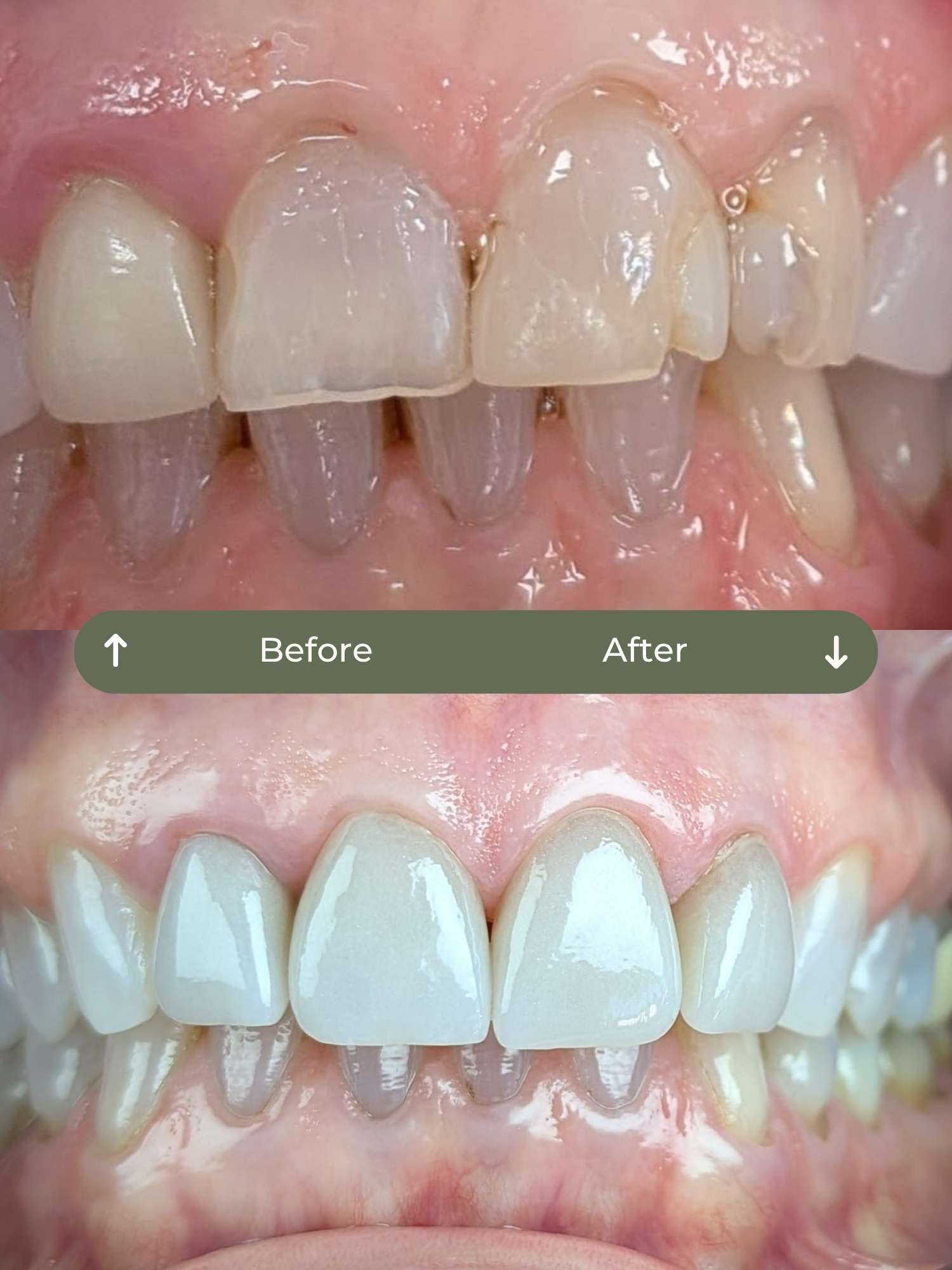
- Composite veneers can look natural and subtle
- Porcelain veneers offer a more polished finish
Composite veneers can look very natural when carefully colour matched and shaped. They are often ideal for patients who want to improve their smile without making it look overly dramatic. But porcelain veneers offer a more refined finish because the material naturally reflects light like natural tooth enamel, giving them greater translucency that looks most natural.

Durability
- Composite veneers last 3-10 years but are more prone to wear
- Porcelain veneers are stronger and last up to 20 years 🏆
Composite veneers can last well, but they require more maintenance and upkeep because they can chip, wear and discolour much more easily. Habits such as nail biting, pen chewing, grinding or using teeth as tools can shorten their lifespan. That said, they’re easy, fast and affordable to repair, replace and renew.
Porcelain veneers are much stronger and more durable. They are designed to withstand everyday biting forces better than composite resin and are generally considered chip and stain-resistant. For durability, porcelain takes the crown.
For durability, porcelain veneers usually come out ahead. Composite veneers remain a strong option for patients who want a more affordable and flexible cosmetic treatment.

Cost
- Composite veneers are usually the lower-cost option
- Porcelain veneers usually cost more because of custom lab work
Composite veneers cost from £250 per tooth and are more affordable because they’re applied directly to the teeth in one visit, making them a budget-friendly option for patients wanting to improve their smile without committing to a higher-cost treatment.
Porcelain veneers cost more (from £750 per tooth) because they involve more planning, preparation, laboratory design and custom materials.
At Tudor House Dental Surgery, we offer 0% finance for up to 12 months, with longer finance options of up to 5 years available for treatments over £1,500.
Compare composite bonding vs veneers instead.

Not sure which veneer material to choose? Book a free consultation in Chester
Composite veneers are usually better if you want a more affordable cosmetic improvement, faster treatment and easier repairs in the future.
Porcelain veneers are better if you want a more natural-looking, longer-lasting makeover. But the overall winner depends on your priorities and budget.
Our cosmetic dentists at Tudor House Dental Surgery can help you decide whether composite veneers, porcelain veneers, composite bonding, whitening or another cosmetic treatment is the most suitable next step to transform your smile.
Our dental practice in Tarvin, Chester, has been trusted since 1983 and offers natural-looking cosmetic dentistry with clear advice, transparent fees and finance options to help make treatment more manageable.
To book an appointment, call 01829 741284 or book a free consultation online.