

Not enough bone for dental implants? Create a stronger foundation with a bone grafting procedure at Tudor House Dental Surgery in Chester to rebuild bone and help your implants thrive.
Once a tooth has been lost, it’s a common and normal process for the surrounding jawbone to shrink because there’s no longer a tooth root present to keep it stimulated.
That’s where bone grafting procedures come in as a simple fix to rebuild bone loss after tooth loss, gum disease, infection, extractions and long-term denture wear.
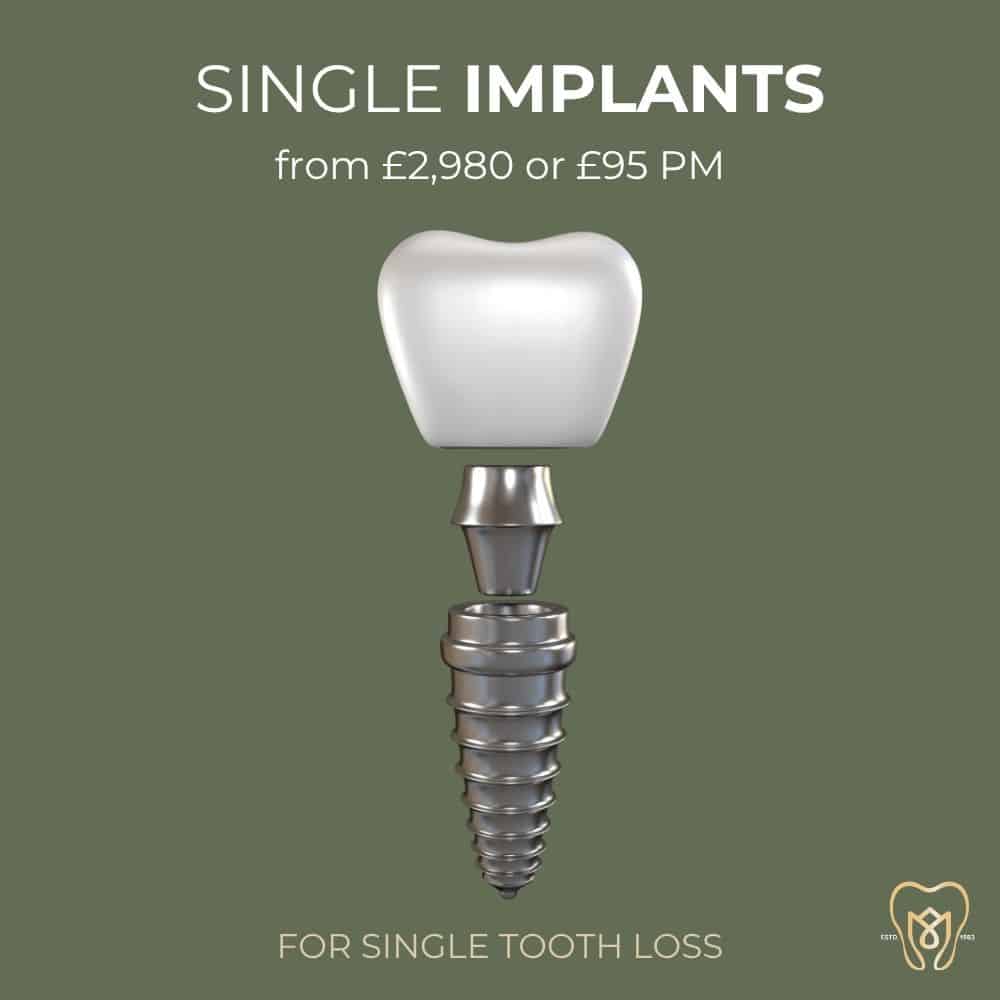
In some tooth replacement cases involving dental implants, bone grafts can be unavoidable. This is because dental implants act as artificial tooth roots that can last for multiple decades and rely on sufficient bone density to remain secure and stable over the long term.
Dental bone grafts provide this essential support and solve this problem with a simple 45-90-minute procedure that can restore lost bone in around 3 months.

At Tudor House Dental Surgery in Chester, a consultation with Dr Valantine (Implantologist, BDS, MSc Implantology) will determine whether you may need only a small graft around one implant, or, in more complex cases, advanced bone regeneration to support multiple implants.
But not every patient needs one, which is why a second opinion from an implantologist like Dr Valantine is highly recommended to determine whether graftless solutions like All-on-4 are possible.
Regardless of your needs, Dr Valantine has over 21 years of experience planning and placing dental implants, including cases in which patients were previously told implants might not be possible without grafting.
Meet with her for free today to learn your options and assess your bone depth and overall suitability for dental implants.
We provide:
The type of bone graft you need depends on how much bone has been lost and where the missing tooth is. Dr Valantine will confirm this after checking your mouth, gum health and bone levels.
| Bone graft type | What it is used for | How it helps |
|---|---|---|
| Socket preservation graft | Used after a tooth is removed | Helps reduce bone shrinkage and preserve the area for a future implant. |
| Small implant bone graft | Used where there is mild bone loss around one implant site | Adds support where the jawbone is too thin or uneven. |
| Guided bone regeneration | Used to rebuild bone around an implant area | Helps encourage bone growth in a controlled space. |
| Sinus lift graft | Used for upper back teeth where the sinus is close to the jawbone | Creates more bone height so implants can be placed safely. |
| Larger ridge graft | Used where more bone width or height has been lost | Rebuilds the jaw ridge for more complex implant treatment. |
You might need a bone graft if:
In some cases, patients can avoid pre-implant procedures such as bone grafting by opting for innovative treatments like All-on-4, which we offer here at Tudor House Dental Surgery in Chester.
As the full mouth implants are placed at an angle, they’re placed in areas of the bone that maximise support.
EXCELLENTTrustindex verifies that the original source of the review is Google. Lovely dentists, explained everything that they were going to do and what it meansPosted onTrustindex verifies that the original source of the review is Google. Went the dentist today with my daughter rose, she enjoys going the dentist they always make her laugh and make her feel comfortablePosted onTrustindex verifies that the original source of the review is Google. Wonderful dental care for my young daughters with both having teeth extractions today! Thank you so much the care and attention they receive by the staff is fabulous. The tooth fairy is going to be very busy tonight!Posted onTrustindex verifies that the original source of the review is Google. After a lot of moving around over the years I hadn't been to the dentist in quite a long time so was quite apprehensive when I decided it was time to go again as I knew things weren't in a great way! Despite this, there was absolutely no judgement from any of the team and they put me completely at ease from that first meeting helping to explain things simply and clearly. I have now been for consultations, multiple hygienist visits and a filling and it has been the same friendly, relaxed and professional service every time. I cannot thank the team at Tudor House enough for helping me get back on the right track and I only wish I'd met them sooner. Worth every pennyPosted onTrustindex verifies that the original source of the review is Google. I cannot recommend this practice highly enough. From the moment I walked in, I was made to feel completely at ease, and the whole experience was far better than I ever expected a dental visit to be. Milly looked after me and she was absolutely wonderful. Her hands are as gentle as cotton wool — I genuinely didn't feel a thing throughout. She is skilled, calm and reassuring, and she takes the time to explain everything so you always know exactly what's happening. If you're someone who feels nervous about the dentist, you'll be in the safest possible hands here. The whole team deserves a mention too. Every single member of staff was warm, friendly and genuinely kind, and that welcoming atmosphere makes such a difference. I'd also like to say a special thank you to Amy, who was lovely and went out of her way to make sure I was comfortable and well looked after. It's rare to find a practice where the care, the professionalism and the warmth all come together so naturally. I left feeling relaxed, well cared for and genuinely grateful. 100% recommended — thank you all so much.Posted onTrustindex verifies that the original source of the review is Google. Just signed up, so had my son's first appointment. He is autistic and i must say, they were absolutely amazing with him. So patient with him and understanding of his sensory needs! Amazing!Posted onTrustindex verifies that the original source of the review is Google. All staff welcoming and friendly,Posted onTrustindex verifies that the original source of the review is Google. I highly recommend this dental practice, I have very bad dentist anxiety due to past experiences, they were very attentive and made sure I felt safe and secure the entire time. I called at 9:15 am and by 10am I was in the chair. The procedure itself was done very well, Millie was amazing, I will definitely make this my regular dentist. Thank you so much to the team for helping me today, I will definitely be back for my checkup ☺️Posted onTrustindex verifies that the original source of the review is Google. Brilliant dentist. My children come here and the staff are always friendly, patient and reassuring. My daughter recently had a filling and they made the whole experience calm and stress-free for her. Would definitely recommend.
Dental finance is available for treatments costing over £1,500, with 0% finance available over 12 months and flexible interest-bearing finance up to 5 years.
| Treatment | Cost |
|---|---|
| Consultation with Dr Valantine | Free |
| CT scan | £140 |
| Dental implant | From £2,980 |
| Bone graft | £618 |
| Treatment stage | What to expect |
|---|---|
| Free consultation | We check the area around your missing tooth or implant, taking X-rays or CBCT scans to assess your bone levels, gums, and the health of the surrounding teeth. |
| Treatment plan | We explain your available tooth replacement options, timeline, costs and whether grafting is essential in your case. |
| Bone graft appointment | Graft material is placed where bone is missing to rebuild support for a future implant, chairside, in a 45-90-minute procedure. |
| Healing break | The graft is left to heal and strengthen for around 3-6 months, creating a stronger foundation. |
| Implant placement | The implant is placed once the area is ready to replace the missing tooth root. |
| Final tooth | A crown, bridge or denture is fitted once the implant is stable. |
Need a flexible appointment that doesn’t interrupt the workday? We can accommodate. Our dentists are available early in the morning, at lunchtime, and in the evenings.

We accept private patients from all surrounding postcodes, towns and villages, including Tarvin, Kelsall, Tarporley, Tattenhall, Ashton, Frodsham, Christleton, Boughton, Ellesmere Port, Nantwich, Winsford, and Hoole.
A dental bone graft is a treatment used to rebuild missing bone in the jaw.
You may need a bone graft when there is not enough bone to support an implant.
Bone grafting rebuilds the area and makes implant treatment possible. Dr Valantine will assess your bone levels and explain what is realistic.
Bone grafting is performed under local anaesthesia, so the area is numb during treatment. You may feel soreness, swelling or tenderness afterwards.
Healing time depends on the size and location of the graft. Some grafts need 3-6 months to heal before an implant can be placed. Timelines broken down during your consultation.
Sometimes, yes. Small grafts can sometimes be placed at the same time as the implant. Larger grafts may need to heal first before implant placement.
Dr Valantine may recommend bone grafting, sinus lift treatment, different implant positions or alternative tooth replacement options such as bridges or dentures.
For many implant patients, bone grafting is worth it because it can make implant treatment possible and improve long-term stability.
Sometimes. All-on-4 implants are placed at strategic angles to use areas of stronger existing bone, which may help some full-mouth patients avoid bone grafting.
Hi Cheshire! 😁 Enjoy a FREE Invisalign consultation, smile-boosting extras & £800 off your aligners.
Flexible payment plans also available, with options to pay as little as £88 per month for your treatment.